Area Rugs for High-Traffic Living Rooms: Size, Pile, Material
A buying guide to area rugs for busy living rooms covering sizing, pile height, fibre choice, pads and the cleaning reality of high-traffic floors.
It is a weekday evening and the dog has already made four trips along the same strip of floor between the couch and the TV. That path is a shade lighter than the rest of the room, the coffee table sits squarely in the middle of it, and someone is about to carry a mug across it. The rug in the photo looked generous and soft; the rug in the room gets crossed constantly from morning to night. Buying for the second one, not the first, is the entire trick.
A high-traffic living room rug has three jobs: stay where it is put, survive being vacuumed often, and still look reasonable from the sofa. Size, pile height and material decide all three, and they are easy to get wrong from a product photo. Here is how to think about the room people actually use.
Choose the size around the furniture, not the floor
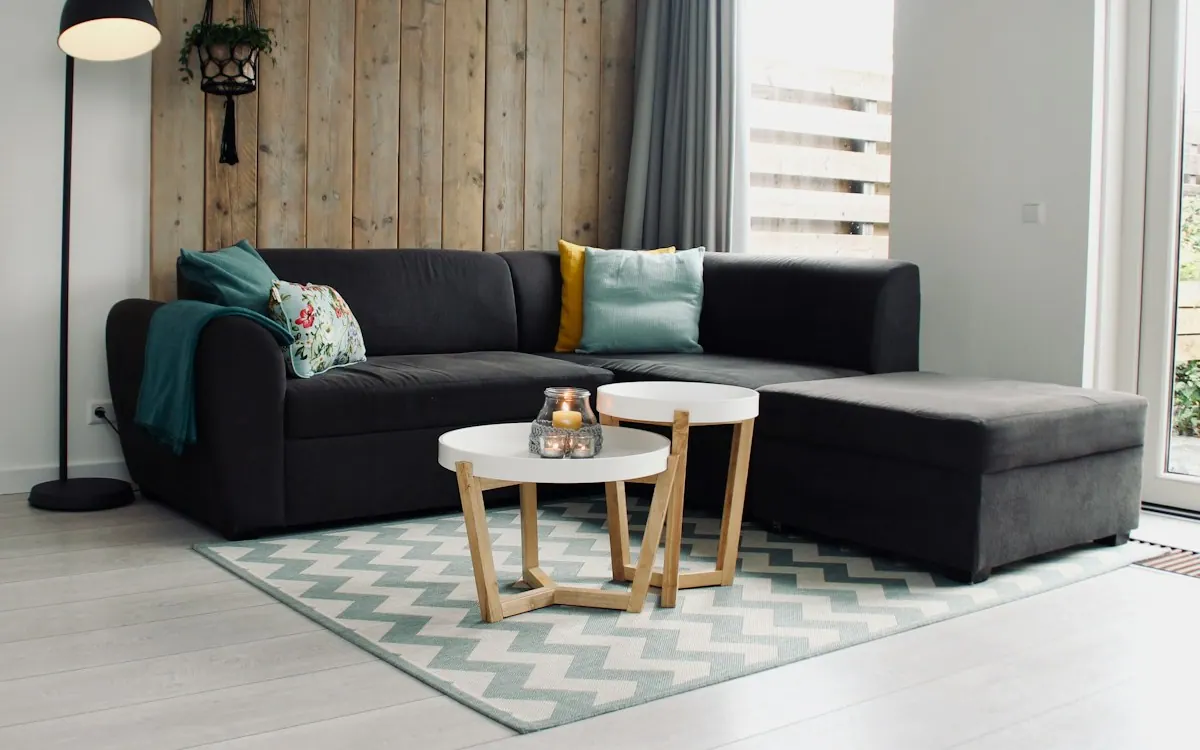
Rug sizes are fairly standard (5x8, 8x10 and 9x12 cover most living rooms) but the right one depends on where the furniture sits. All legs on the rug reads most formal and needs the largest size. Front legs on the rug, back legs off, is the workhorse for a normal family room. Just the coffee table on a smaller rug suits a tight space.
The mistake is a rug that floats in the middle with the sofa fully off it: everything looks unanchored, and the busiest path lands on bare floor. Tape each candidate size on the floor with painter’s tape and live with it for a day. An 8x10 tends to suit a standard three-seat sofa grouping; a 5x8 works under a coffee table in a smaller room.
Low pile or high pile
Pile height is the single biggest cleaning decision. A low or flat pile gives crumbs, grit and pet hair nowhere to hide, lets a vacuum glide over it, and sits flat under a coffee table. A high pile or shag feels wonderful under bare feet and traps exactly what you will be trying to remove. Based on published specifications and how the weaves are described, low-pile constructions are the ones manufacturers position for high-traffic areas.
High pile still has a place in a reading corner. On the couch-to-TV path it becomes a maintenance job. If you want softness in a busy room, get it from a felt rug pad rather than a deep pile.
Wool, synthetic, cotton and flatweave
Each fiber asks for something different. Manufacturers commonly describe wool as resilient and naturally forgiving of soil, and a low-pile wool rug springs back from furniture dents well, but it needs gentler spot-cleaning and is generally listed as shedding a little early on. Synthetics such as polypropylene are commonly described as easy to wipe and quick to spot-clean, which is why they show up in family rooms; the tradeoff is a busy strip that can flatten or take on a sheen. Cotton flatweaves are thin, often reversible and easy to shake out, but offer almost no cushioning.
For a pet or kid household, a patterned low-pile synthetic or flatweave is the forgiving choice: it hides the traffic lane between cleanings and tolerates another pass with the vacuum.
The tradeoffs nobody puts on the tag
Every appealing quality has a cost. Plush feels good and traps dirt. A tight flatweave cleans easily and feels thin underfoot. Wool lasts and asks for careful cleaning; synthetic shrugs off spills and can flatten in the busiest strip. A bigger rug anchors the room and costs more, and a patterned rug hides wear while limiting what else goes on the floor.
The pad is a tradeoff too. It stops creeping, cushions the pile and protects the floor, but it is one more piece to trim and pay for, and some pad types are not advised for certain heated or finished floors. Vacuuming is the hidden ongoing cost: a deep shag wants a gentle setting, while a low pile takes a normal pass. Choose the rug you will actually clean.
Who should skip it
If what you want most is a sink-in, plush feel underfoot, a low-pile high-traffic rug will disappoint; shop for comfort in a bedroom or formal sitting room instead. And if the room is rarely used with a delicate floor you would rather show off, a large rug and pad may be more coverage than it needs.
A short checklist before you buy
- Tape the candidate size on the floor and check the front legs of the sofa land on it.
- Pick low or flat pile for any path that gets crossed all day.
- Match the fiber to your cleaning patience, not just the color.
- Order a pad sized slightly under the rug, and check it suits your floor type.
- Read the care notes for spot-cleaning and vacuum settings before committing.
- Choose a pattern or mid-tone if you want the traffic lane to stay quiet.
The picks below are the rug categories worth comparing first, grouped by size, pile and material. Prices move constantly, so check current price and availability on the retailer page before you commit, and read the listed dimensions and care notes against the footprint you taped out: two 8x10 rugs rarely share the same finished size.
Picks worth comparing
These are product categories to compare, not a ranked list. Recommendations are based on published specifications and household fit. Check the retailer page for current price, size and availability.
low-pile flatweave area rug 8x10
Best for a busy couch-to-TV path — Open-plan living rooms where the main walkway cuts straight across the rug.
What to check
- Flat-woven construction is generally listed as low-profile and often reversible
- Cotton and synthetic blends are commonly described as easy to vacuum
- A tight weave is generally listed as holding up to repeated foot traffic
Pros / tradeoffs
- Low pile does not trap crumbs or pet hair the way a shag does
- Thin enough to sit under a coffee table without wobbling it
- Offers little cushioning underfoot
- Without a pad it can creep on hard flooring
Prices change often. Check the retailer for the current price and availability.
machine-woven synthetic area rug 5x8
Best for households with pets and kids — Smaller seating areas that take spills, muddy paws and frequent spot-cleaning.
What to check
- Manufacturers commonly describe polypropylene as resistant to staining and easy to spot-clean
- Machine-woven piles are generally listed as uniform and low-shedding
- Frequently sold in a wide range of printed patterns
Pros / tradeoffs
- Handles repeated wiping better than a delicate natural fiber
- Patterned options hide traffic lanes between cleanings
- Can flatten in the busiest strip over time
- Synthetic pile may show a sheen difference where it wears
Prices change often. Check the retailer for the current price and availability.
low-pile wool area rug 8x10
Best if you want natural fiber that lasts — A living room that gets steady use but where a natural material matters.
What to check
- Manufacturers commonly describe wool as resilient and naturally forgiving of soil
- Low-pile constructions are generally listed as shedding less than tall shag
- Often sold with a bound or serged edge
Pros / tradeoffs
- Springs back from furniture dents better than many synthetics
- Tends to look better as it ages rather than merely worn
- Usually needs more careful spot-cleaning than a synthetic rug
- Natural shedding is commonly described as normal early on
Prices change often. Check the retailer for the current price and availability.
felt-and-rubber rug pad 8x10
Best for keeping the rug put and the floor safe — Any hard-floor living room where the rug slides or the finish needs protecting.
What to check
- A rubber side is generally listed as the gripping layer
- Felt adds a thin cushion without much extra height
- Commonly sold trimmed slightly smaller than the rug size
Pros / tradeoffs
- Stops the creeping and curled corners that come with a bare rug
- Adds a little softness underfoot without a plush pile
- One more piece to trim to size and pay for
- Some pads are not advised for certain heated or finished floors
Prices change often. Check the retailer for the current price and availability.
Common questions
Choose the size around the furniture, not the floor. The common approaches are all furniture legs on the rug, front legs only on the rug, or just the coffee table on a smaller rug. An 8x10 usually suits a standard sofa-and-coffee-table grouping with the front legs on; a 5x8 tends to float under a coffee table in a smaller room. Measure the seating area first, then pick the size that leaves a consistent border of bare floor.
Generally, yes, based on published specifications and how the weaves are described. A low, tight pile gives crumbs and hair nowhere to hide and lets a vacuum pass over it without bogging down. A tall shag needs more careful attention and can trap grit that wears the fibers from the bottom. For a path that gets crossed all day, low pile is the lower-maintenance choice.
On hard flooring, almost always. A pad keeps the rug from creeping and bunching, cushions the pile against the floor, and protects the finish from a rough backing. It matters more with a flatweave, which has little weight of its own. Check that the pad type is listed as suitable for your specific floor before buying.
A low-pile synthetic or a flatweave is usually the practical pick, because both tolerate frequent vacuuming and spot-cleaning. Wool is resilient but asks for gentler cleaning. Whatever you choose, avoid a tall shag in a pet household; claws, hair and the occasional accident are all harder to deal with in a deep pile.